Sodom & the ICE men - What the Story of Sodom & Gomorrah Really Teaches us


The story of Sodom & Gomorrah paints a vivid picture of God's judgment on very particular sins, but they’re not the sins we may be thinking of. Yet I believe it teaches a very important lesson that the church and the wider world need to hear today.


What it said
In Genesis chapter 18, Abraham, the father of God’s chosen people, the Hebrews, is visited by three men, two of whom turn out to be angels and one (probably) God the Son, in a pre-Jesus human form. He reveals to Abraham that he has in mind to mind destroy the nearby cities of Sodom and Gomorrah, because “The outcry against [them] is so great and their sin so grievous, that I will go down and see if what they have done is as bad as the outcry that has reached me…”
In chapter 19, the two angels in the guise of men go off to investigate Sodom & Gomorrah. Abraham’s nephew, Lot, sees these two strangers about to spend the night alone in the town square without food or shelter. He is a caring, righteous person like his uncle. So, following the best Eastern hospitality traditions, he invites them into his home, offers to wash their feet, bakes bread for them and insists they take shelter with him for the night.
The chapter continues:
“Before they had gone to bed, all the men from every part of the city of Sodom—both young and old—surrounded the house. They called to Lot, “Where are the men who came to you tonight? Bring them out to us so that we can have sex with them.” Lot went outside to meet them and shut the door behind him and said, “No, my friends. Don’t do this wicked thing. Look, I have two daughters who have never slept with a man. Let me bring them out to you, and you can do what you like with them. But don’t do anything to these men, for they have come under the protection of my roof.” “Get out of our way,” they replied. “This fellow came here as a foreigner, and now he wants to play the judge! We’ll treat you worse than them.” They kept bringing pressure on Lot and moved forward to break down the door. But the men inside reached out and pulled Lot back into the house and shut the door. Then they struck the men who were at the door of the house, young and old, with blindness so that they could not find the door. The two men said to Lot, “Do you have anyone else here—sons-in-law, sons or daughters, or anyone else in the city who belongs to you? Get them out of here, because we are going to destroy this place. The outcry to the LORD against its people is so great that he has sent us to destroy it.”

What it meant then
To Lot what made the mob's attempted rape so egregious was not that it was against other men, but that it was against male guests who’d “come under the protection of [his] roof.”
Lot’s distress at this extreme abuse of “strangers” reflects the best ancient Eastern hospitality practices, as well as God’s own priorities, which we see later enshrined in the Levitical laws to “love the alien as yourself” (Leviticus 19:34).

But God had a wider perspective about Sodom’s sins. He saw this attempted abuse of strangers as part of a broader pattern of a complete turning away from the life-standards He calls people to.
Ezekiel gives us the clearest explanation of the sins that led to Sodom & Gomorrah’s destruction, and the answer is not what many assume: “Look, this was the iniquity of your sister Sodom: She and her daughter had pride, fullness of food, and abundance of idleness; neither did she strengthen the hand of the poor and needy. They were haughty and committed abomination before me; Therefore I took them away as I saw fit.” (Ezekiel 16:49/59) (NKJV).
So, the wickedness that led to Sodom’s judgement were sins of arrogant pride, greed and neglect and abuse of the poor and needy. These formed the ultimate well of sins from which flowed out the sin of attempted rape of “strangers”.

The culminating reference to “abomination” is most likely the attempted abuse of angels. This is the explanation given by the New Testament’s in Jude verse 7. This describes Sodom’s ultimate sin as the attempted rape of angels in “going after strange flesh”. (KJV) “strange flesh” here could not itself refer to “homosexual intercourse” because the Greek word used is “hetero”, which means of a different kind. It must refer to the attempted rape of angels as different flesh.
The mob presumably didn’t know these were angels, but the clear implication is they were aware there was something “heteros”, i.e. different, about them, which presumably made them more attractive sexual objects. Their sin was a hetero- rather than homo-sexual sin; attempted sex with beings of a different, higher kind and order, which has always been particularly egregious in God’s sight. See e.g. Genesis 6:4 and the birth of the Nephilim giants from angels who slept with women. 2 Peter 2:4 appears to support this interpretation.
Both these New Testament references appear to focus on a sense of arrogant disrespect of the divine order – apostacy against the living God highlighted by their attempted sexual abuse of higher angelic beings. This in turn links with their sin of arrogant pride highlighted by Ezekiel. This seems to reflect an attitude of “I can do whatever I want to whomever I want and even God and his angels can’t stop me.”

What it teaches us for today
This offers an important lesson for the church today about where God’s priorities are. Whether we take a traditionalist or revisionist view of same-sex relationships, the stand out social message in both Old and New Testament is not God’s condemnation of any same-sex sexual practices, which the Bible mentions in only a small handful of verses). Instead, it's His concern for the poor, the stranger and outcast and against those who exploit or ignore their plight, highlighted 100s of times throughout Scripture.
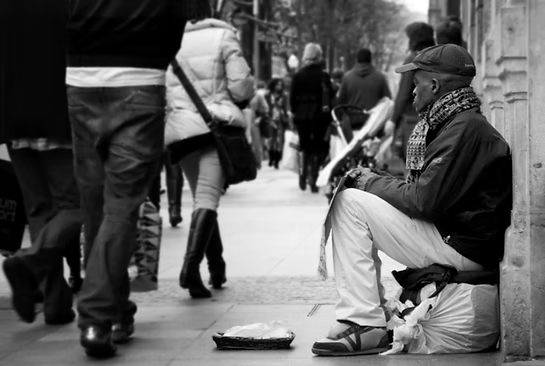
How we treat the poor and the stranger are the very sort of sins Jesus warned us we will be judged on to test the genuineness of our faith.
This is his test: " I was hungry and you gave me something to eat, I was thirsty and you gave me something to drink, I was a stranger and you invited me in, I needed clothes and you clothed me, I was sick and you looked after me, I was in prison and you came to visit me.” (Matt. 25: 35/36)

If we wish to avoid God’s judgment this is a lesson that the better-off in this world (like me) especially need to heed.
The true message of Sodom and Gomorrah is the same message as the Good Samaritan: love your neighbour as yourself. (Luke 10:15-37) And if we think compassion should end at our borders we need to re-read that parable to see how it answers the question: who is my neighbour?
In Leviticus the people of Israel were reminded that they themselves were once “aliens” in a foreign land of Egypt, and instructed that, “When an alien resides with you in your land, you shall not oppress the alien. The alien who resides with you shall be to you as the citizen among you; you shall love the alien as yourself.” (Leviticus 19:33-34)
We should never forget that our Lord himself was once an alien in the same foreign land of Egypt, where his family were refugees fleeing from Herod (Matt. 2:13-18). So, when Jesus spoke of people welcoming him as “a stranger” he talked as a man with his own experience as a refugee.
And the letter to the Hebrews reminds us of how the story of Sodom teaches about how we should treat “strangers”: “Do not forget to show hospitality to strangers, for by so doing some people have shown hospitality to angels without knowing it.” (Hebrews 13:1-2).
Jesus’s Matthew 25 priorities should affect how we use our time and money and also how and who we vote for. Do the leaders and policies we vote for “strengthen the hand of the poor and needy” (Ezekiel 16:49) and “welcome” the “stranger” as Christ asks us to? Or, like the real Sodomites, do they grind the poor into the dust and persecute the stranger, whilst flaunting their own pride, and greedy abundance?

I believe we see the embodiment of the opposite of these Christ-values in the current President of the United States of America - in both his behaviour and his policies: arrogant pride, greed and neglect and abuse of the poor, at home and abroad. But most recently we’ve seen this through his abuse of “strangers” in his land. His policies have emulated Sodom’s violent mob, who rather than welcome “strangers” to their land, tried to violently abuse them. He and his allies have copied this sin through his ICE thugs’ violent persecution of “strangers”; Somalis and other races he views as “garbage” to be rounded up and removed from the country: https://www.bbc.co.uk/news/articles/c208x9v68w3o

So hell-bent are they on ejecting these “undesirables” that they’re even prepared to gun down their “own” - entirely innocent - US citizens who are deemed to get in their way.
Sodom’s underlying sins of arrogant pride, greed and neglect and abuse of the poor, was ultimately realised in the “abomination” of the attempted rape of angels. ICE’s abominable murder of the likes of Renee Good and Alex Pretti was perhaps the ultimate outworking of the sins of Trump and his allies.

It is simply incompatible with true Christian faith to support and vote for a man whose own life and policies so entirely trash Christ's command to love our neighbour.
I therefore find it chillingly ironic that some leading traditionalist theologians and teachers misinterpret the stand out message of Sodom & Gomorrah message as judgment on gay sex, whilst vaunting Donald Trump as some "Christian" hero. Because the true message of these very verses actually condemns them for supporting Trump’s policies that abuse the poor and the stranger. And in doing so, in my view, they have lost any intellectual, moral or spiritual right to be heard on this issue.
Christ’s imperative of loving our neighbour should be reflected in all aspects of our daily lives: how we treat others, how we spend our time and our money, and how we treat our planet on which we all depend. And so if we go on a protest, wear a badge or fly a flag, let if be for a cause that aligns with Christ’s values - that “strengthens the hand of the poor and needy” and “welcomes” the “stranger”; not for causes that oppress them or make them feel unwelcome or even persecuted.

And in a democratic country when we enter the ballot box we should apply the same test of Christ’s love to how we vote. Are we voting for people and policies who aim to “strengthen the hand of the poor and needy” and show compassion on “the stranger”? Or are we voting for those, who like Donald Trump, will strengthen the hand of the super-rich, impoverish the poor and persecute the stranger?
In Britain, thank God, we won’t get Donald Trump on our ballot paper, but we will get a party whose policies quite closely mirror his, led by a man who sees him as an ally and whose own history of racism and dishonesty appears little better: Nigel Farage’s Reform party. For those Christians contemplating voting for them I would urge them to heed the true lesson from the story of Sodom and Gomorrah, the same lesson Jesus taught us in Matthew 25 - that God will judge us primarily not based on our sex lives but on how we treat the poor, the vulnerable and the stranger. How do our lives and our votes reflect those divine priorities?


Comments